
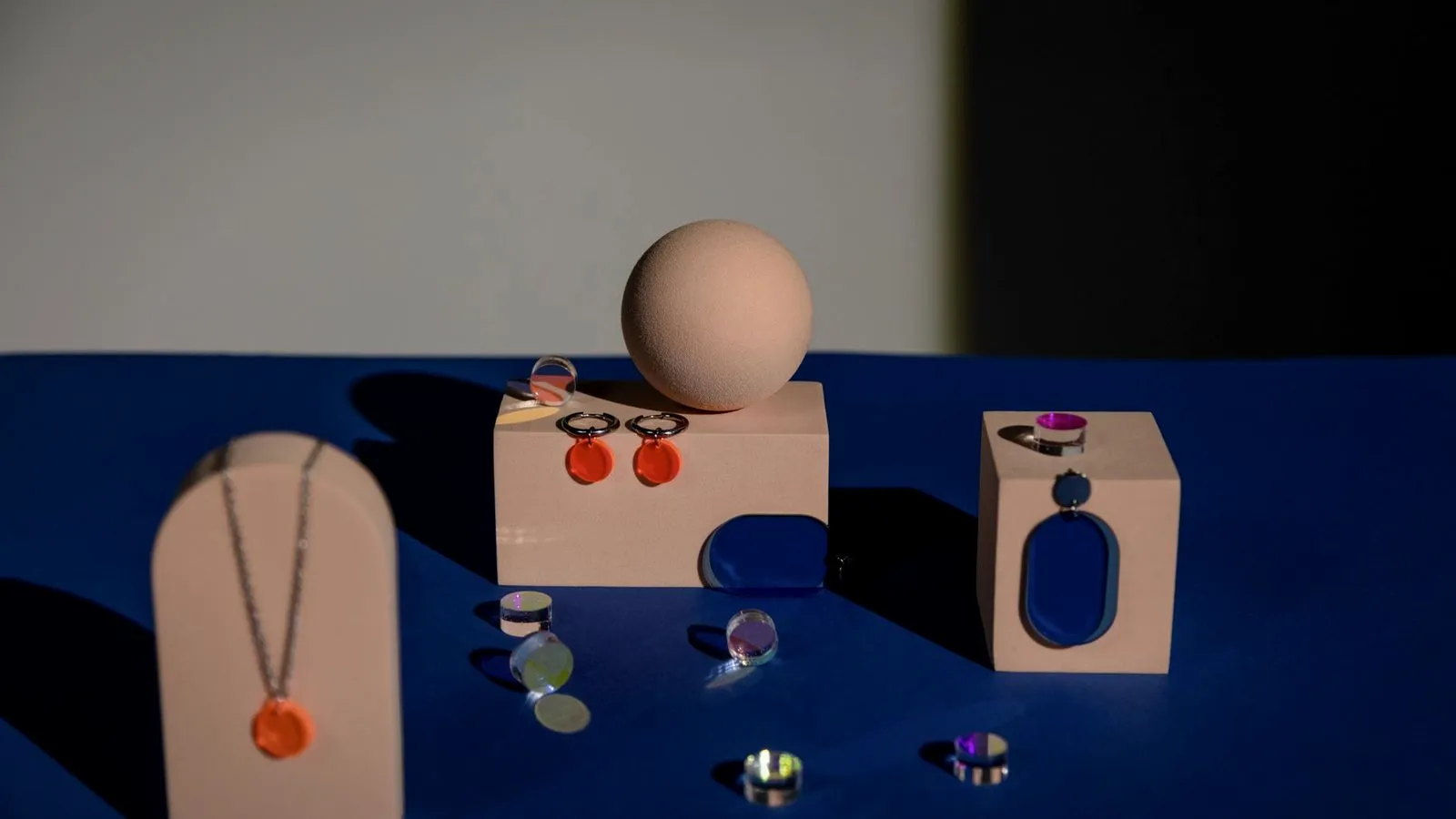
3D printed jewelry is made in three ways: printed directly in plastic (PLA, PETG or resin) and worn as is, printed as a castable resin or wax pattern that becomes silver or gold through lost-wax casting, or printed as a try-on model before casting. Home printers handle the first route; metal pieces need a caster.
Resin printers dominate fine jewelry because they capture small details that filament printers cannot. Our guide to 3D printing resin explains the resin types, including the castable resins this article relies on.
The short answer
| Route | Printer | Material | Result | Best for |
|---|---|---|---|---|
| Direct plastic print | Filament (FDM) or resin | PLA, PETG, standard or tough resin | Plastic piece, painted or plain | Statement earrings, pendants, bangles, prototypes |
| Castable pattern, then lost-wax casting | Resin (SLA, DLP or MSLA) or wax printer | Castable or castable wax resin, or 100% wax | Real silver, gold or bronze | Rings, charms, fine and filigree pieces |
| Try-on model | Resin | Standard resin | Plastic copy for fitting | Checking size and look before casting |
How is 3D printed jewelry made?
3D printed jewelry starts as a digital model, usually built in CAD (computer-aided design) software, and then splits into two paths: wear the print, or use it to make metal. Formlabs describes both in its jewelry workflow.
- Wear the print: plastic jewelry printed in PLA, PETG or resin, then sanded, painted and fitted with findings.
- Cast the print: a castable pattern goes into a plaster-like investment, burns out in a furnace and leaves a cavity that is filled with molten metal.
- Fit the print: Formlabs notes that resin prints work as fitting pieces for customer consultations, adjusted and reprinted in a few clicks.
- Mold the print: Formlabs says standard resins suit cold (RTV) rubber molds, while its High Temp resin withstands vulcanized rubber, so one master can produce many wax copies.
Where to find 3D printed jewelry designs
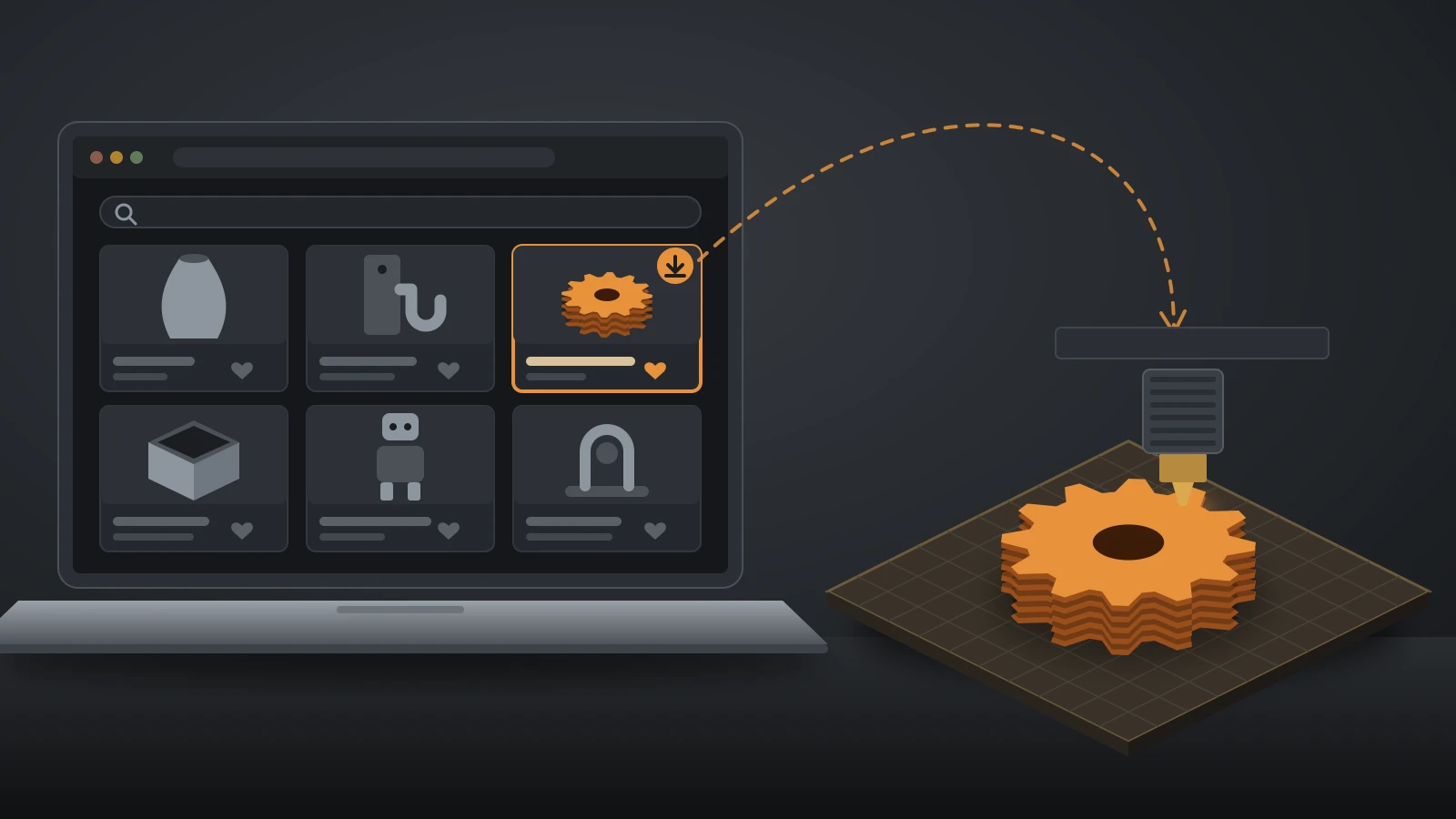
Most people start with jewelry models from online libraries before designing their own. Model libraries such as MakerWorld and CGTrader run dedicated jewelry categories, and most large libraries return earrings, rings, pendants, beads and jewelry boxes in a search.
- Check the printer type: many free jewelry files are made for filament printers and are too chunky for casting; casting-ready files usually say so.
- Check the license: Creative Commons NonCommercial (NC) licenses forbid selling prints, as our guide to 3D print ideas to sell explains.
- Check wall thickness: thin bands and prongs that look fine on screen may snap in plastic or fail to fill with metal.
- Design your own: CAD tools let you set a ring’s exact inner size, which ready-made files cannot.
For broader sculptural and decorative work, see our guide to 3D printed art.
FDM vs resin for 3D printed jewelry
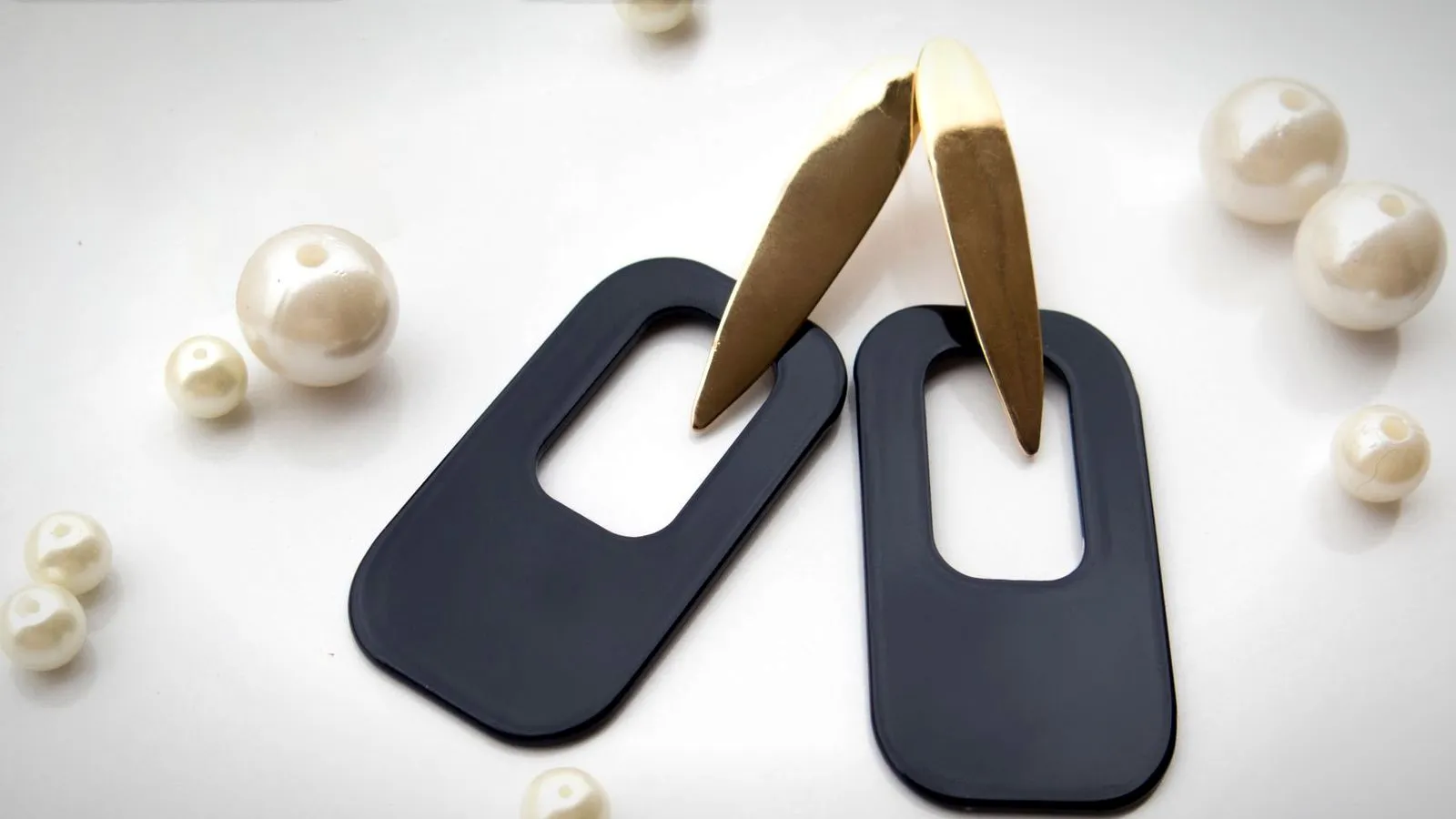
Resin is the better choice for small, detailed jewelry, while filament printers suit bold, lightweight plastic pieces. The difference comes from how each printer draws: a filament printer lays down lines of melted plastic, and a resin printer cures each layer with light, giving smoother surfaces on tiny parts.
| Filament (FDM) | Resin (MSLA, SLA, DLP) | |
|---|---|---|
| Detail | Visible layer lines on small curves | Fine detail and smooth surfaces |
| Typical pieces | Statement earrings, bangles, chunky pendants, jewelry boxes | Rings, charms, filigree, casting patterns |
| Casting | Not covered by the casting guides cited here | Castable resins designed for clean burnout |
| Handling | No chemicals | Gloves, washing and curing on every print |
| Skin contact | No skin-contact claim unless the maker states one | Liquid resin is a skin sensitizer; only cured, approved resins near skin |
A smaller nozzle sharpens filament jewelry; our 3D printer nozzle guide covers the trade-offs. Lightweight FDM earrings in PLA or PETG are a popular, low-cost way to test designs before anything is cast.
3D printing for lost-wax casting
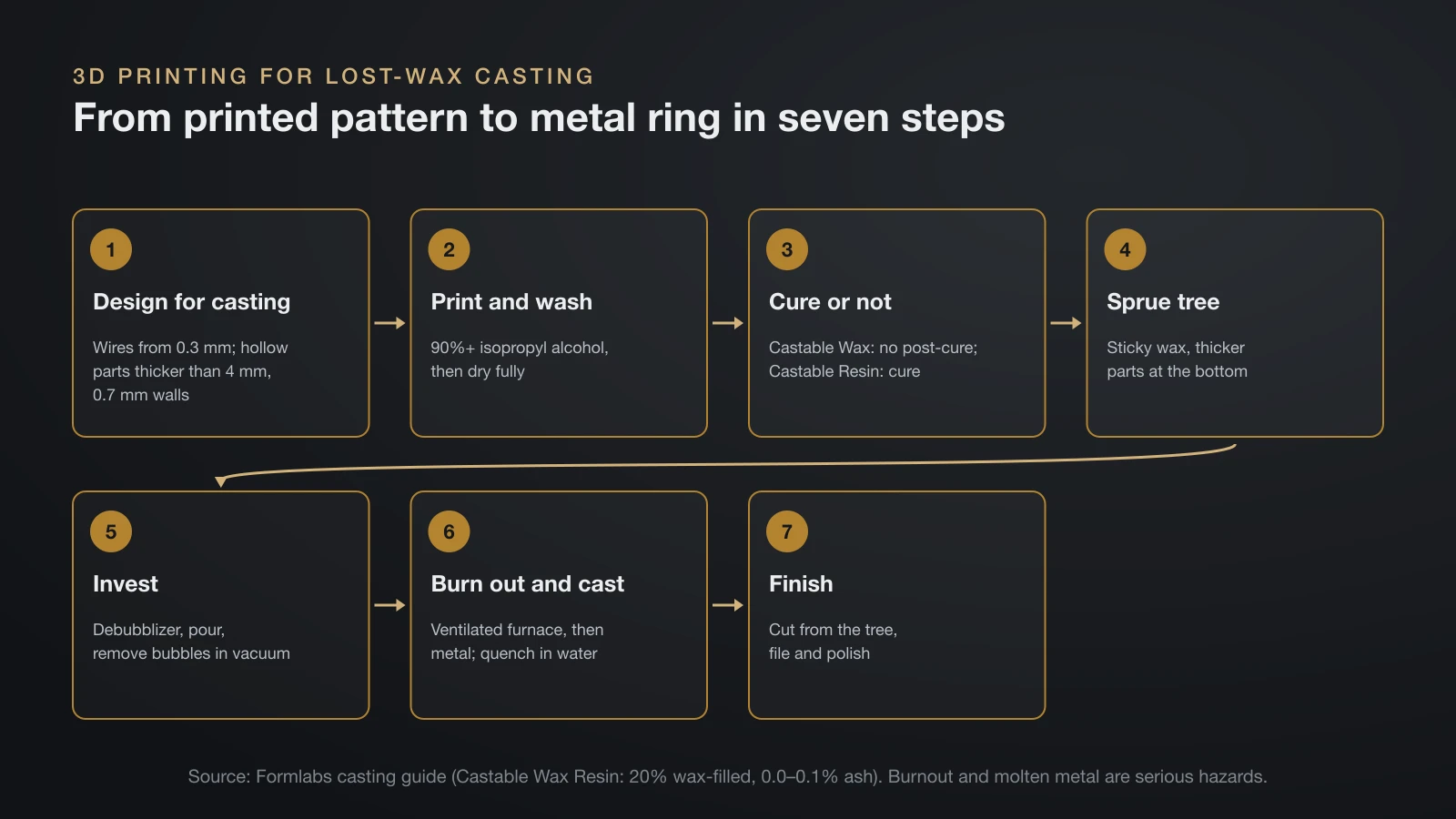
Lost-wax casting with 3D printing replaces the hand-carved wax model with a printed pattern, then follows the traditional casting steps. Formlabs’ casting guide outlines the process for its Castable Wax Resin, a 20% wax-filled resin with 0.0–0.1% ash content.
- Design for casting: Formlabs says filigree can be printed with wires as thin as 0.3 mm. Parts thicker than 4 mm should be hollowed, with 0.7 mm walls and drain holes.
- Print and wash: wash in 90% or stronger isopropyl alcohol and let the parts dry fully; leftover resin causes pitting in the metal.
- Cure or not: Castable Wax Resin needs no post-cure, while Formlabs’ Castable Resin does.
- Build the sprue tree: attach the patterns to a wax sprue with sticky wax, thicker parts at the bottom. Printed resin patterns do not melt like wax, so Formlabs suggests a little superglue or fast epoxy if wax will not hold them.
- Invest: dip the tree in a debubblizer, then pour investment into the flask and remove bubbles under vacuum.
- Burn out and cast: heat the flask in a well-ventilated furnace on the resin’s burnout schedule, then pour or vacuum-cast the metal and quench the flask in water.
- Finish: cut the pieces from the tree, file the sprue points and polish.
Burnout and molten metal are serious hazards. Many designers print the patterns and send them to a casting house; our guide to 3D printed molds covers other casting routes.
Wax 3D printers vs castable resin
Wax 3D printers print the casting pattern in actual wax and are mostly found in production casting houses. 3D Systems, for example, sells its MJP 300W Plus for jewelry with 100% wax materials and claims more than 9,000 rings per month per printer for its jewelry printing. Desktop resin printers with castable resin cost far less and are the usual entry point for independent jewelers.
Can you 3D print gold jewelry?
You can make gold jewelry from a 3D print, but not on a home printer. The print is a pattern that a caster turns into gold, or a model that an industrial metal printer service produces directly.
How you describe it matters when you sell. Under the Federal Trade Commission’s (FTC) Jewelry Guides, the word “gold” alone means 24 karat gold throughout; a gold alloy must have its karat fineness, such as 14K, right before the word. Gold-plated items must say so, and “gold electroplate” requires a gold or at least 10 karat gold alloy layer equivalent to at least 0.175 microns of fine gold. “Sterling silver” means at least 925 parts per 1,000 silver.
A PLA piece in gold-colored filament or gold paint is plastic, so call it gold-colored, never gold.
How to size a 3D printed ring
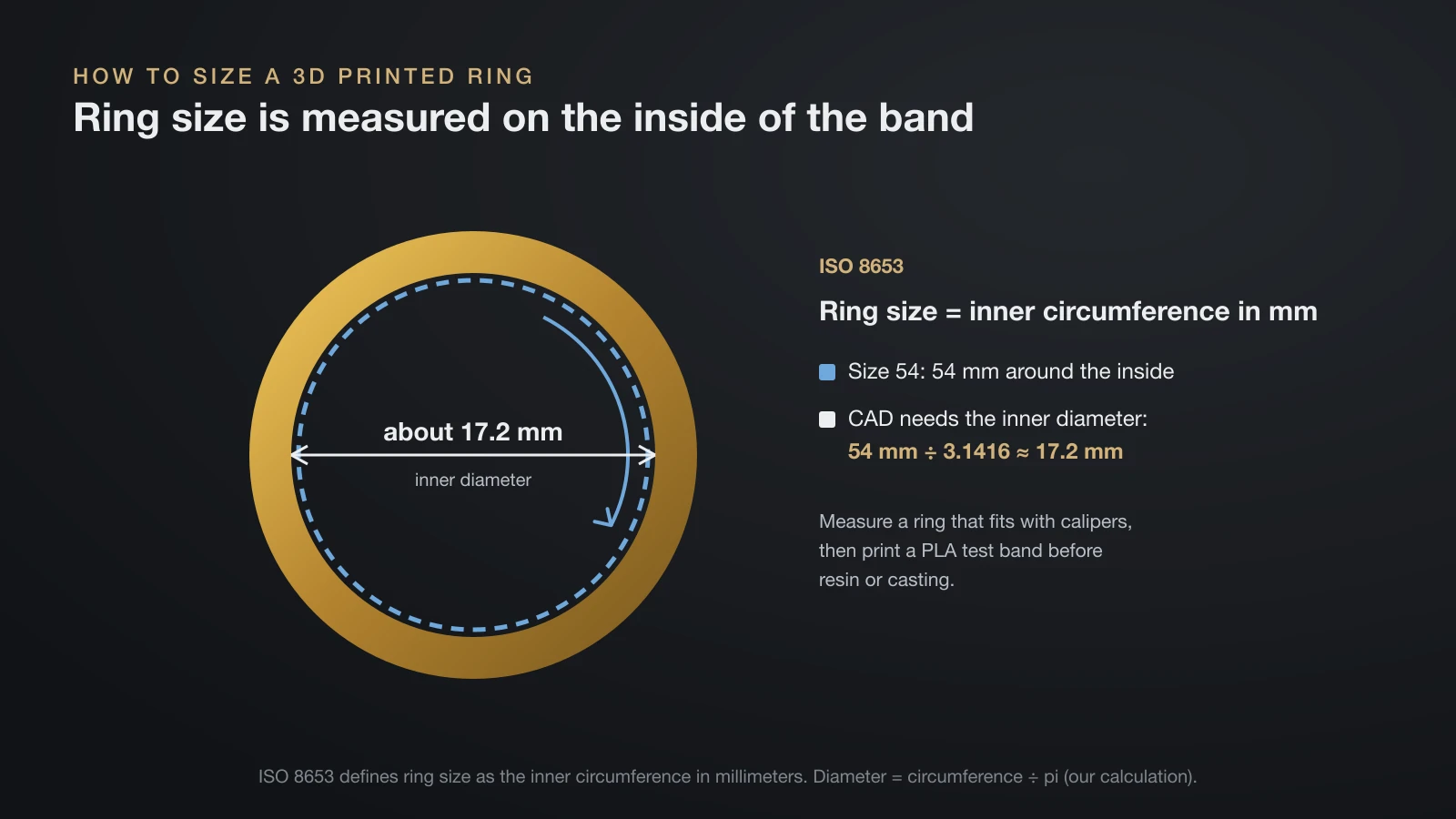
Ring size is a measurement of the inside of the band. ISO 8653, the international jewelry standard for ring sizes, has defined ring size since its 1986 edition as the inner circumference of the ring in millimeters, so an ISO size 54 ring is 54 mm around the inside.
Most CAD tools ask for the inner diameter instead. Divide the circumference by pi (3.1416): 54 mm ÷ 3.1416 gives an inner diameter of about 17.2 mm (our calculation).
- Measure a ring that fits: use calipers across the inside of the band, for the finger you are sizing.
- Model to that inner diameter: leave enough band thickness for the material; plastic needs more than metal.
- Print a test band: a quick PLA band confirms the fit before you print in resin or send a pattern to cast.
- Ask the caster: casting houses can advise whether a pattern needs a size allowance for their process.
Is 3D printed jewelry safe to wear?
3D printed jewelry is only as skin-safe as the material it is made from, and most printing materials carry no skin-contact claim. Treat plastic prints as not certified for prolonged skin contact unless the maker says otherwise.
- Resin: liquid resin is a skin sensitizer. Formlabs’ Model V3 Resin safety data sheet lists H317, “may cause an allergic skin reaction”. Where Formlabs does allow skin contact, as with Tough 1500 Resin, it requires a specific process, including a 20-minute wash in 99% or stronger isopropyl alcohol.
- Filament: PLA and PETG are common for costume jewelry; treat them as uncertified for skin contact unless the filament’s maker states otherwise.
- Metal findings: the American Academy of Dermatology (AAD) says more than 18% of people in North America are allergic to nickel. It names earrings and earring backs among the biggest culprits and suggests nickel-free or hypoallergenic metals, surgical-grade stainless steel, 18, 22 or 24 karat yellow gold, pure sterling silver or platinum.
For earrings and pieces worn every day, a cast precious-metal piece avoids most of these questions. This is general information, not medical advice.
Finishing and findings for 3D printed jewelry
Finishing turns a raw print into wearable jewelry, and the steps depend on the material. Plastic prints are sanded, primed and painted or sealed; cast metal is filed, polished and sometimes plated.
- Sand and smooth: remove support marks and layer lines with progressively finer abrasives.
- Color: paint, metallic finishes or dyed filament; seal painted pieces so the color survives wear.
- Add findings: jump rings, ear wires, clasps, pin backs and chain. Design a loop or a recess into the model rather than relying on glue alone.
- Glue where needed: for flat-backed brooches or cabochon settings, our guide to glue for PLA explains which adhesives bond printed plastic.
Choose findings in the metals the AAD lists if the piece touches skin.
3D printed jewelry boxes, holders and beads
Jewelry storage and beads are some of the most practical filament prints, and they avoid skin contact entirely. Jewelry boxes with lids, ring trays, earring stands, necklace trees and drawer organizers print well in PLA or PETG on any filament printer.
Printed beads are easy too: string holes can be modeled in, and multicolor or silk filaments add finish without paint. For holders and boxes, measure the pieces you own and size compartments around them; a drawer insert that fits exactly is something a store rarely sells.
The bottom line
3D printed jewelry works best when you match the route to the piece: filament for bold plastic designs and storage, resin for fine detail, and castable resin or wax for real silver and gold through lost-wax casting. Size rings by their inner circumference, treat plastic and resin as not skin-safe unless the maker says otherwise, and describe metal content honestly when you sell.
Sources
- Formlabs: Jewelry 3D printing, Castable Wax Resin, Introduction to casting for 3D printed jewelry patterns, Form Wash time settings and Model V3 Resin SDS (fitting pieces, RTV and vulcanized rubber molds, 20% wax-filled, 0.0–0.1% ash, 0.3 mm wires, 4 mm shelling, 0.7 mm walls, 90% IPA wash, no post-cure for Castable Wax, sprue tree, debubblizer, burnout and casting steps, Tough 1500 skin-contact wash, H317)
- 3D Systems: Jewelry solutions (MJP 300W Plus, 100% wax casting patterns, more than 9,000 rings per month per printer)
- ISO: ISO 8653:1986 (ring size defined as the inner circumference in mm) and its current revision ISO 8653:2016 (ring-stick measurement and size designation)
- eCFR: 16 CFR Part 23, FTC Guides for the Jewelry, Precious Metals, and Pewter Industries (“gold” means 24 karat, karat designation for alloys, plated and electroplated gold of at least 10 karat and 0.175 microns, sterling silver at least 925/1,000)
- American Academy of Dermatology: Nickel allergy: how to avoid exposure (more than 18% of people in North America allergic to nickel; earrings and backs; metals to choose)