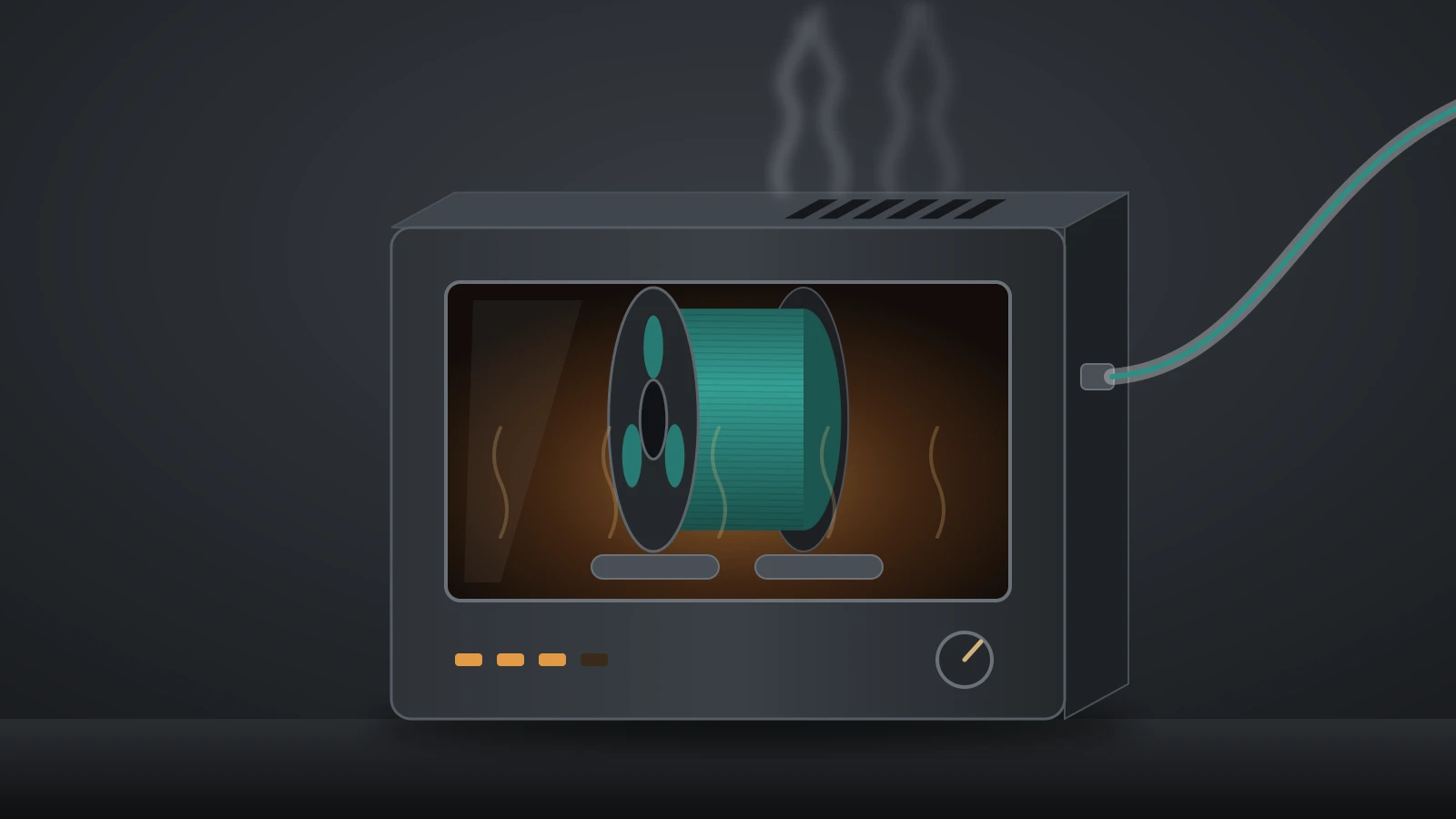

ASA filament (acrylonitrile styrene acrylate) is an ABS-like 3D printing plastic made for parts that live outdoors or near heat. It resists UV and weather, stays rigid to roughly 90–100 °C (194–212 °F) on manufacturer data sheets, and prints at about 240–270 °C (464–518 °F) on a hot bed, ideally inside an enclosure.
The trade-off is printability. ASA warps, wants a warm chamber for larger parts and gives off styrene fumes, so it is far happier in an enclosed 3D printer than on an open frame in the living room. This guide compares ASA with PLA, PETG and ABS using real data sheet numbers, then covers print settings, fumes, finishing and when to skip it.
The short answer
| ASA filament | |
|---|---|
| What it is | Acrylonitrile styrene acrylate, a weather-resistant relative of ABS |
| Best for | Outdoor parts, parts near heat, functional parts that see sunlight |
| Heat deflection (ISO 75, 1.8 MPa) | 92 °C (Bambu Lab), 100 °C (Polymaker) |
| Nozzle temperature | 240–270 °C (Bambu Lab), 260 °C (Prusa) |
| Bed temperature | 80–100 °C (Bambu Lab), 105–110 °C (Prusa) |
| Enclosure | Strongly recommended; Prusa calls it necessary for large parts |
| Part cooling fan | Low or off: 0–80% (Bambu Lab), off (Polymaker) |
| Drying before printing | 80 °C for 8 h (Bambu Lab), 70 °C for 7 h (Polymaker) |
| Fumes | Mainly styrene; print in a well-ventilated room |
| Skip it for | Indoor decorative prints, open printers in shared living space |
What is ASA filament?
ASA is a thermoplastic built from acrylonitrile, styrene and an acrylate rubber. It is a close cousin of ABS (acrylonitrile butadiene styrene): the backbone is similar, but ABS uses butadiene rubber where ASA uses acrylate. Manufacturers position ASA as the weather-resistant version of ABS.
Prusa describes ASA as the successor to ABS and says that, compared with ABS, it is more UV resistant, warps less and does not smell as much. Polymaker’s data sheet calls it “an alternative to ABS with an improved weather resistance.”
What people print with ASA
- Outdoor parts: Bambu Lab names plant signs, mailboxes and wind vanes as typical ASA prints.
- Parts near heat: fan shrouds and brackets close to motors or warm electronics, where PLA would soften.
- Car parts: trim clips, mounts and interior pieces that bake in a parked car. Our guide to 3D printed car parts covers where printing makes sense and where it does not.
- Smooth, glossy parts: ASA dissolves in acetone, so it can be vapor smoothed like ABS.
ASA filament properties vs PLA, PETG and ABS
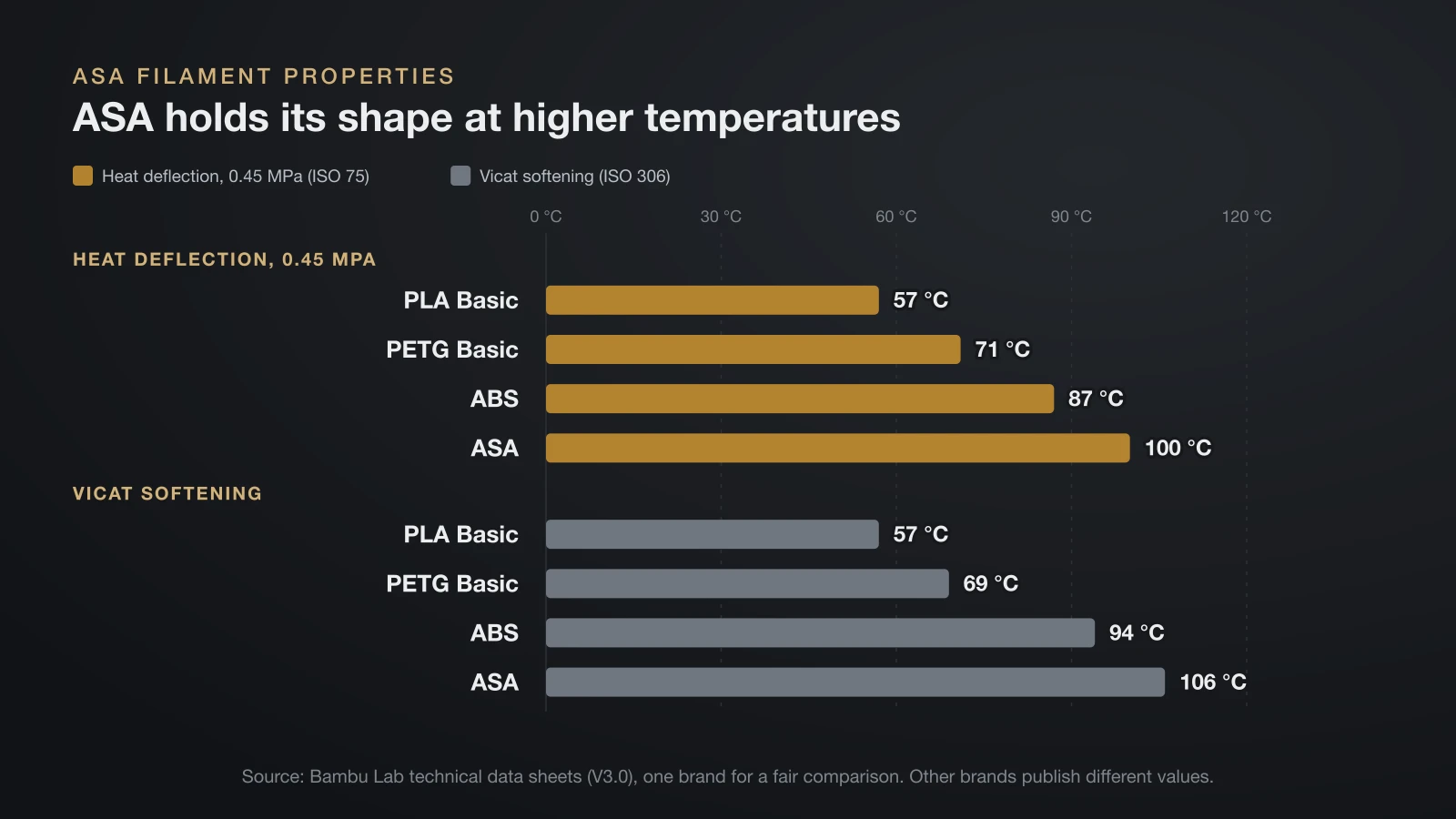
To compare materials fairly, you need numbers from one manufacturer, tested the same way. Bambu Lab publishes technical data sheets for all four materials using the same ISO test methods, so every value in this table comes from Bambu Lab’s sheets (version 3.0).
| Bambu Lab data sheet | PLA Basic | PETG Basic | ABS | ASA |
|---|---|---|---|---|
| Heat deflection, 0.45 MPa (ISO 75) | 57 °C | 71 °C | 87 °C | 100 °C |
| Heat deflection, 1.8 MPa (ISO 75) | 54 °C | 68 °C | 84 °C | 92 °C |
| Vicat softening (ISO 306) | 57 °C | 69 °C | 94 °C | 106 °C |
| Tensile strength, X-Y (ISO 527) | 35 MPa | 51 MPa | 33 MPa | 37 MPa |
| Impact strength, X-Y (ISO 179) | 26.6 kJ/m² | 34.2 kJ/m² | 39.3 kJ/m² | 41.0 kJ/m² |
| Density | 1.24 g/cm³ | 1.25 g/cm³ | 1.05 g/cm³ | 1.05 g/cm³ |
| Nozzle temperature | 190–230 °C | 230–260 °C | 240–270 °C | 240–270 °C |
| Bed temperature | 35–45 °C | 65–75 °C | 80–100 °C | 80–100 °C |
| Chamber temperature | 25–45 °C | 35–50 °C | 45–60 °C | 45–60 °C |
ASA’s advantage is heat, not raw strength. It deflects under load at 92 °C (198 °F), against 54 °C (129 °F) for PLA, so a part that would sag in a hot car or next to a motor keeps its shape. In tensile strength it sits close to PLA and ABS and well below PETG in this data set.
Density is a small bonus. ASA weighs 1.05 g/cm³ against 1.24 g/cm³ for PLA, so a 1 kg spool of ASA holds roughly 18% more filament length (estimate: 1.24 ÷ 1.05, same diameter assumed).
Numbers also differ between brands and test setups. Polymaker’s ASA data sheet lists a heat deflection temperature of 100 °C at 1.8 MPa and 103 °C at 0.45 MPa, and Prusa rates its ASA for use up to 93 °C. Compare materials within one brand’s data, not across brands.
ASA vs PLA
PLA is the easy material: it prints at 190–230 °C on a 35–45 °C bed with the fan on, and needs no enclosure. ASA needs roughly 40–50 °C more at the nozzle, about twice the bed temperature, a warm chamber and good ventilation. In return, it survives sun and heat that would deform PLA. If a part stays indoors at room temperature, a tougher PLA is usually enough; see our comparison of PLA plus vs PLA.
Against ABS, Prusa credits ASA with better UV resistance, less warping and less smell, and in Bambu Lab’s data it also has the higher heat deflection. Against PETG, it gives up tensile strength in exchange for much higher heat resistance. If you like how PETG prints but need more impact toughness rather than heat resistance, PCTG filament is the closer upgrade.
Why is ASA filament hard to print?
ASA shrinks as it cools. When the bottom of a part is warm and the top is exposed to cooler air, the layers pull at each other, corners lift off the bed and tall walls can split between layers. Prusa names this significant warping, caused by temperature differences between the model and its surroundings, as ASA’s main disadvantage.
The fix is to keep the whole part warm and evenly cooled:
- Hot bed: Prusa says at least 100 °C (212 °F); Bambu Lab lists 80–100 °C for its own plates.
- Warm chamber: Bambu Lab recommends 45–60 °C inside the enclosure.
- Little or no part cooling: strong airflow cools the outer layers too fast.
- No drafts: Prusa warns not to create a draft around the print, even while ventilating the room.
Heat has a cost for the printer, too. Prusa notes that printing a lot of ASA in an unventilated enclosure can slowly deform the plastic fan shroud or extruder parts. Also confirm that your hotend is rated for the nozzle temperature before you start.
ASA filament print settings
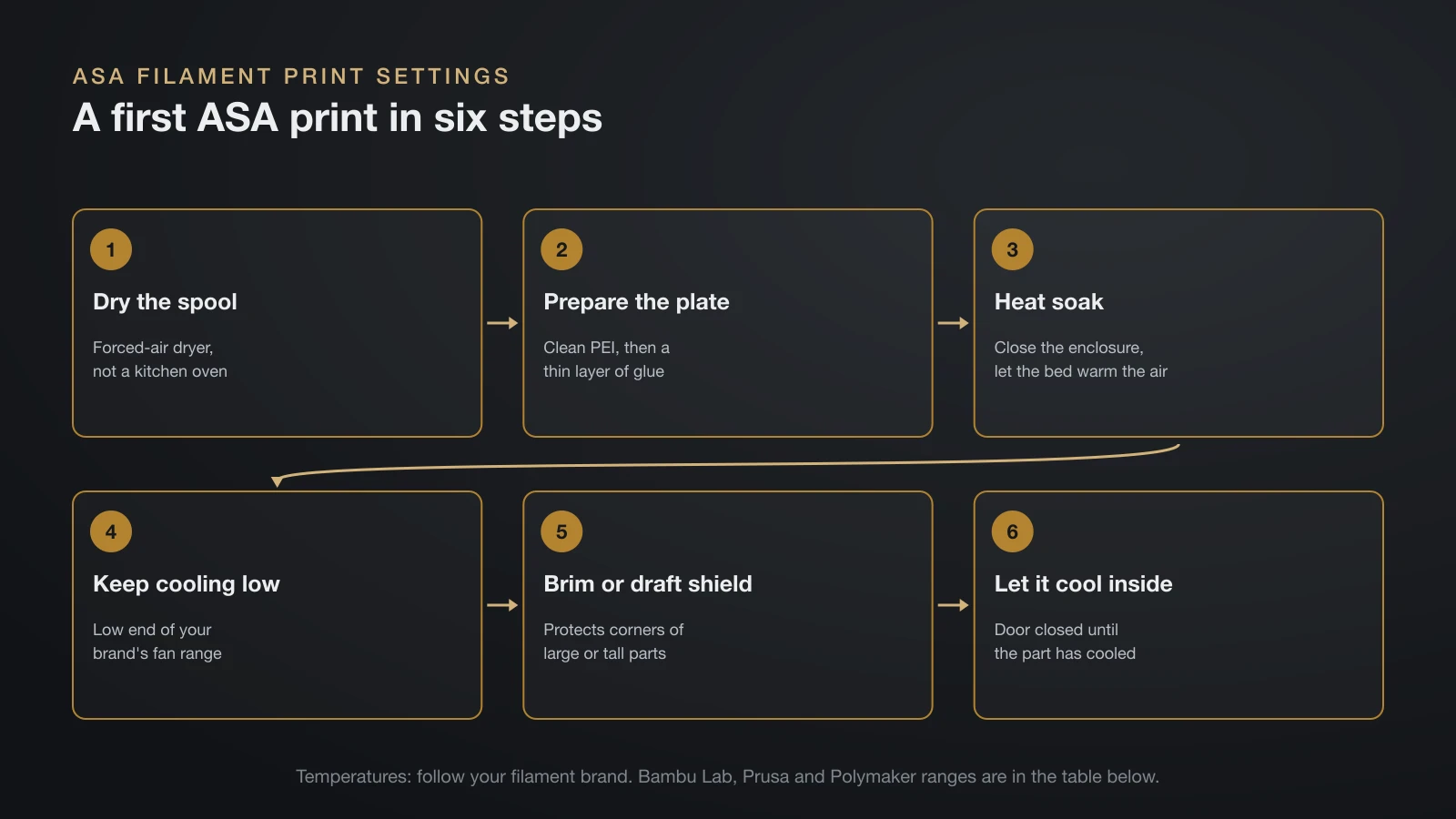
Start from your filament brand’s own numbers. The three data sets below show how much the recommendations vary.
| Setting | Bambu Lab ASA | Prusament ASA (Prusa) | Polymaker ASA |
|---|---|---|---|
| Nozzle | 240–270 °C | 260 °C | 230–260 °C |
| Bed | 80–100 °C | 105 °C first layer, then 110 °C | 75–95 °C |
| Build surface | Engineering, High Temperature or Textured PEI plate, with glue | Smooth or powder-coated PEI sheet with glue stick | PC or textured PEI |
| Part cooling fan | 0–80% | Not listed | Off |
| Enclosure | Chamber at 45–60 °C | Necessary for large parts | Needed |
| Drying | 80 °C for 8 h | Partially hygroscopic | 70 °C for 7 h |
| Speed | Under 250 mm/s | Not listed | 50–200 mm/s |
A reliable routine for a first ASA print:
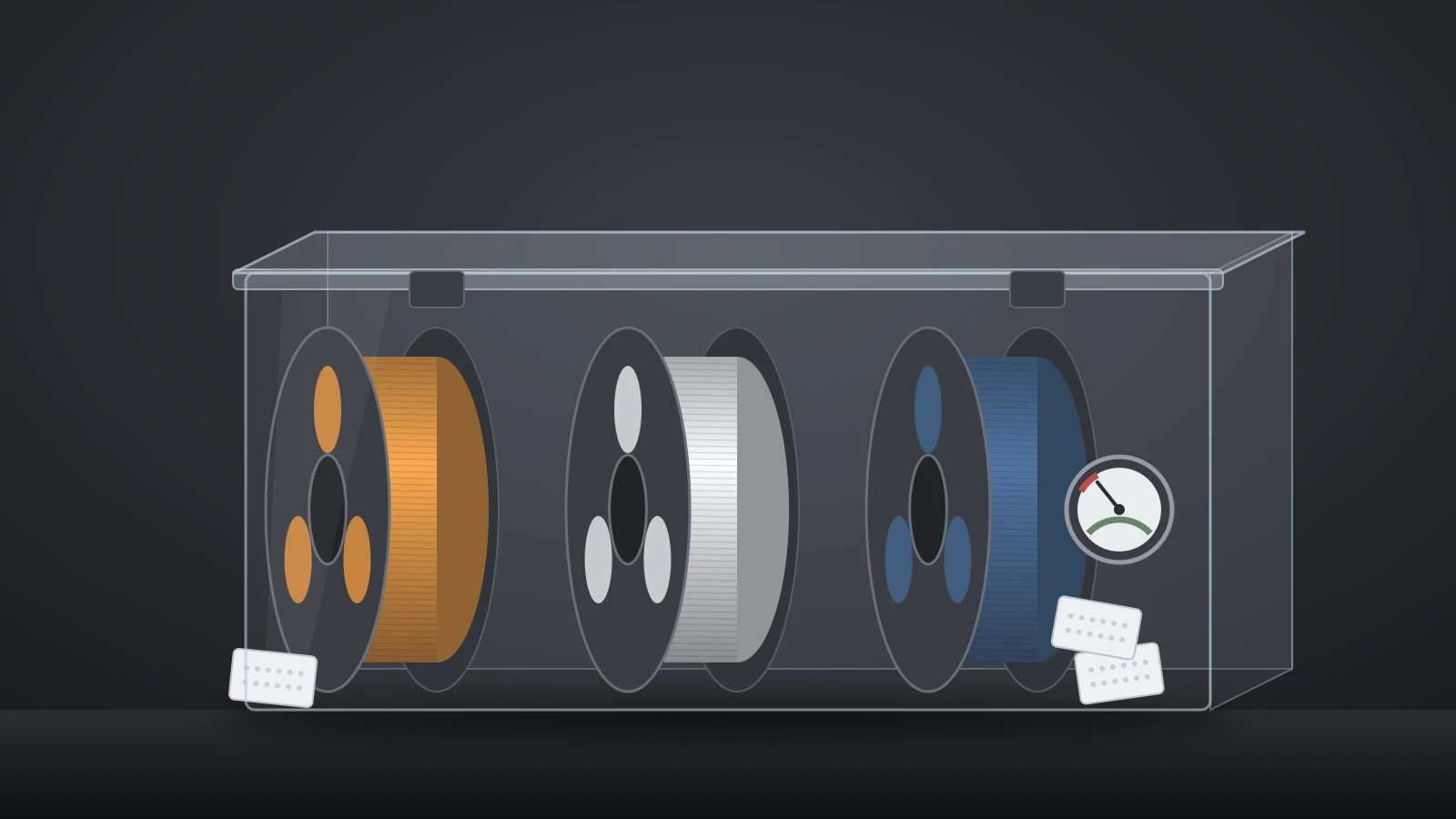
- Dry the spool. ASA absorbs some moisture. Bambu Lab specifies a forced-air drying oven and warns that a kitchen or microwave oven can damage filament.
- Prepare the plate. Clean it, then apply a thin layer of glue. Both Bambu Lab and Prusa call for glue with ASA on their PEI plates.
- Heat soak. Close the enclosure and let the bed warm the air for a few minutes before the first layer.
- Keep cooling low. Start at the low end of your brand’s fan range and raise it only for overhangs and bridges.
- Add a brim or draft shield on large or tall parts to protect corners and edges from cooler air.
- Let it cool inside. Keep the door closed until the part has cooled, so a sudden draft does not crack it.
If the first layer or dimensions are off, fix that before blaming the material. Our guide on how to calibrate a 3D printer walks through temperature, flow and first layer tests in order.
ASA fumes and ventilation
Heated ASA releases volatile organic compounds, mainly styrene. Prusa lists “potentially dangerous fumes (styrene)” among ASA’s drawbacks and says to print in a well-ventilated room.
A 2022 study by Wojnowski and colleagues at Gdańsk University of Technology measured emissions while printing ABS, ASA, nylon and PETG in a sealed chamber, with the nozzle at 240 °C for ABS, ASA and PETG. Styrene was the main compound released by ASA, but its emission rate was less than a quarter of ABS’s styrene emission. Overall emissions from nylon were about an order of magnitude lower than from ABS and ASA.
That is one printer and one filament of each type, so read it as a direction, not a guarantee. Practical steps:
- Print in a ventilated room you are not sitting in, or in an enclosure that is filtered or vented outdoors.
- Keep your distance while printing and give fumes time to clear before opening the enclosure.
- Keep children and pets away from the printer.
Sanding, gluing and acetone smoothing ASA
ASA is easy to finish. Prusa notes that it sands well wet or dry, can be glued or welded with acetone and can be smoothed with acetone vapor. Smoothed parts get a glossy surface that Prusa compares to car lacquer, at the cost of some detail and sharp edges.
Acetone is highly flammable and its vapor should not be breathed. Smooth parts only in a well-ventilated space, far from heat sources and flames, and keep the container closed.
Bambu Lab also lists annealing for ASA at 80–90 °C for 6–12 hours to relieve internal stress. It warns that some parts can deform or warp in the process, so test a spare part first.
When not to use ASA filament
ASA is a problem solver, not a default. Skip it when:
- The part lives indoors at room temperature. PLA or a toughened PLA prints more easily, at lower temperatures and without an enclosure.
- You have no enclosure and the part is large. Warping and layer splits will cost more time than the material saves.
- The printer shares your living or sleeping space and you cannot ventilate it.
- You need the highest strength at room temperature. In Bambu Lab’s data, PETG has higher tensile and bending strength.
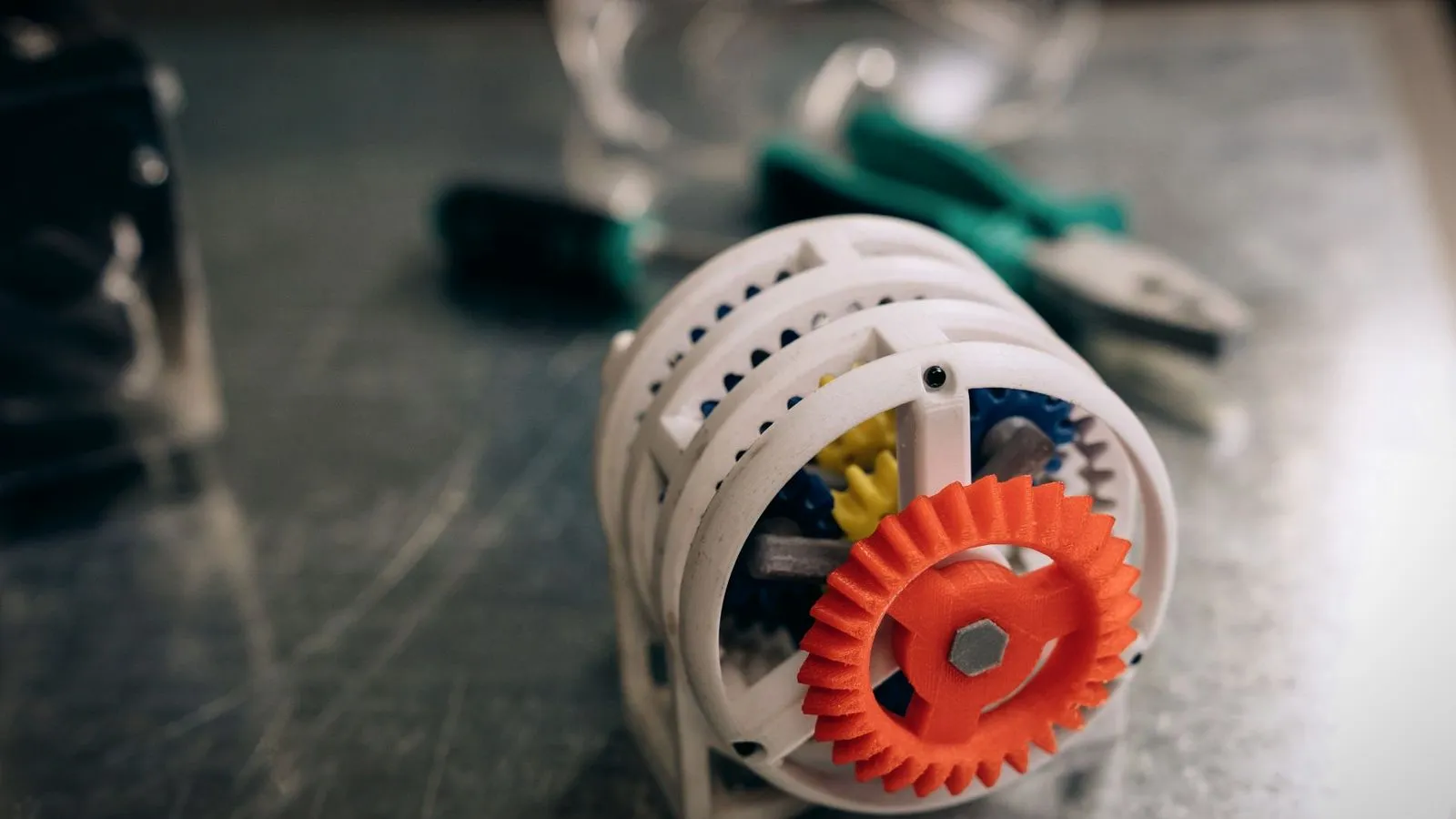
- The part must flex, slide or wear against another part. Gears, hinges and snap fits last longer in nylon filament, which is tougher and lower in friction, although it also needs drying and usually an enclosure.
- The part is safety-critical. No printed plastic should hold a load where failure could hurt someone, and data sheet values come from ideal test specimens, not real parts.
The bottom line
ASA filament is the material to reach for when a part must survive sun, weather or heat. Its data sheet heat deflection is about 90–100 °C, far above PLA, but it is not stronger than PETG at room temperature. Print it hot, keep the part warm in an enclosure, keep the fan low, dry the spool and ventilate the room.
Sources
- Bambu Lab technical data sheets, version 3.0: ASA, ABS, PETG Basic, PLA Basic (heat deflection, Vicat, tensile, impact, density, print, drying and annealing settings)
- Polymaker: Polymaker ASA technical data sheet (heat deflection 100/103 °C, 230–260 °C nozzle, 75–95 °C bed, PC or textured PEI, fan off, enclosure needed, drying 70 °C for 7 h)
- Prusa Knowledge Base: ASA material guide (260 °C nozzle, 105/110 °C bed, use up to 93 °C, enclosure, draft shield, fumes, acetone smoothing)
- Wojnowski W. et al. (2022), Emission Profiles of Volatiles during 3D Printing with ABS, ASA, Nylon, and PETG Polymer Filaments, Molecules 27(12): 3814