
PLA plus vs PLA comes down to toughness. PLA+ is standard PLA that each brand modifies so it breaks less easily, and manufacturer data sheets show 2 to 9 times the impact strength of the same brand’s regular PLA. Tensile strength, heat resistance and print settings stay close to plain PLA, and “PLA+” has no fixed definition.
Because every brand makes PLA+ its own way, this guide compares each brand’s PLA+ with its own standard PLA, using the manufacturers’ technical data sheets. It also covers print settings, when the upgrade is worth it and what the other PLA names mean. For PLA+ on its own, brand by brand, see our PLA+ guide. For parts that face sun or heat, neither is the right pick; look at ASA filament instead.
The short answer
| Standard PLA | PLA+ | |
|---|---|---|
| What it is | Plain polylactic acid filament | PLA modified by the brand for toughness; recipes are not published |
| Impact strength | Low; thin parts snap | About 2 to 9 times higher on the data sheets below |
| Tensile strength | Baseline | Within about 10% of the same brand’s PLA |
| Stiffness | Higher | Lower in all three brands’ data |
| Heat deflection | About 54–60 °C | About 54–61 °C, practically unchanged |
| Nozzle temperature | 190–230 °C | Same range, or up to 20 °C hotter at the top (Bambu Lab) |
| Best for | Display models, prototypes, fine detail | Clips, brackets, hooks, tools, things that get dropped |
Why PLA plus vs PLA is a brand-by-brand question
There is no shared specification for PLA+. The name is marketing shorthand for a toughened PLA, and each company uses its own additives, which it does not disclose. You will find the same idea sold as PLA+, PLA Pro, Tough PLA or PLA Tough+.
The claims are similar across brands. eSUN says its PLA+ has strength “significantly improved compared with ordinary PLA.” Polymaker describes PolyLite PLA Pro as combining high toughness and high rigidity with the ease of printing of regular PLA. The measured results, however, differ widely.
The tests differ too. eSUN reports Izod impact under the Chinese standard GB/T 1843, while Polymaker and Bambu Lab report notched Charpy impact under ISO 179. That is why the fair comparison is always one brand’s PLA+ against the same brand’s standard PLA, printed and tested the same way.
PLA vs PLA+ data sheets: three brands compared
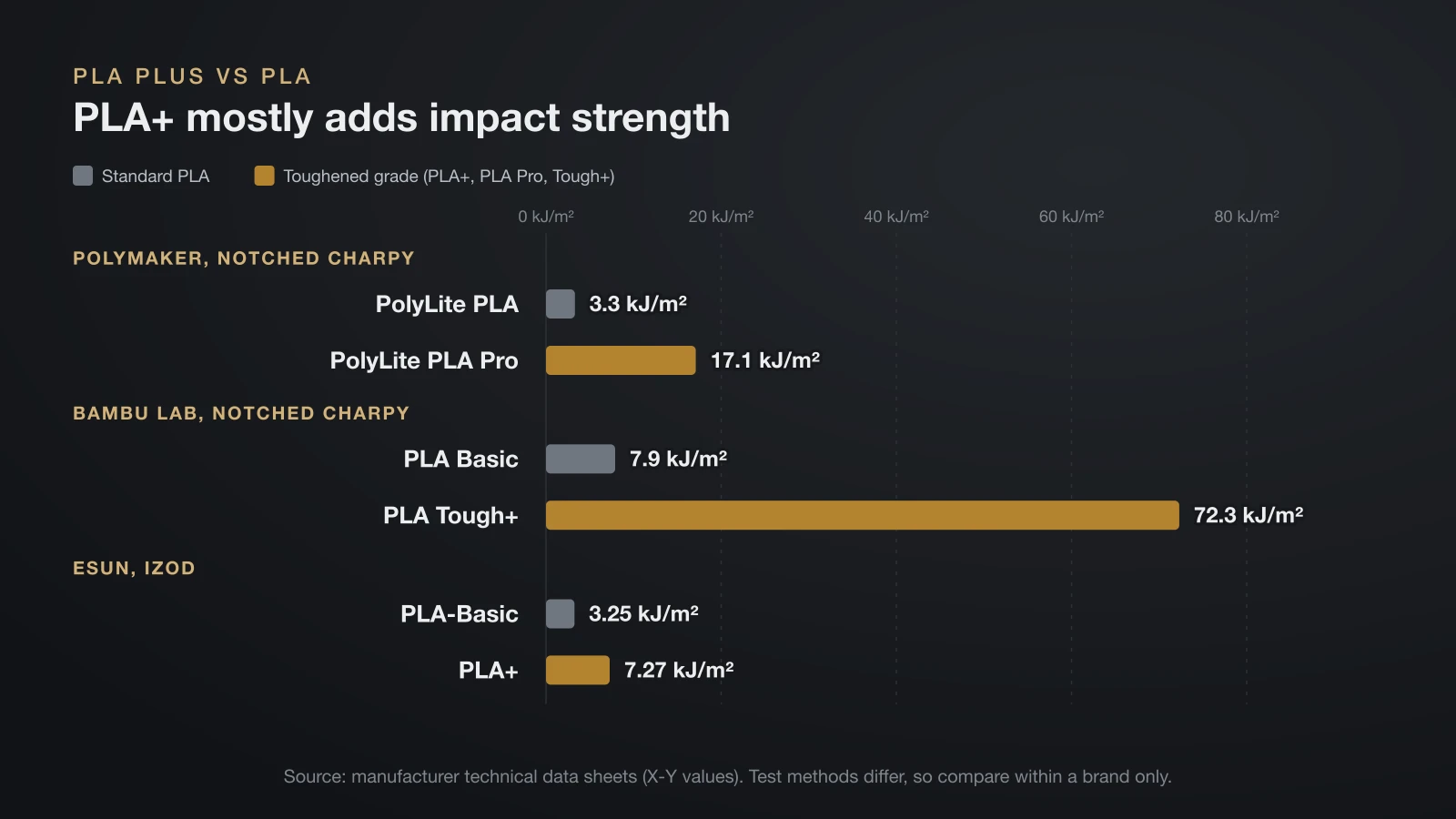
The table pairs each brand’s standard PLA with its toughened grade. All values are the typical X-Y values from the manufacturers’ current technical data sheets.
| Brand and grade | Impact strength | Tensile strength | Elongation at break | Heat deflection | Nozzle temp |
|---|---|---|---|---|---|
| eSUN PLA-Basic | 3.25 kJ/m² (Izod) | 64.27 MPa | 4.61% | 53.65 °C (0.45 MPa) | 210–230 °C |
| eSUN PLA+ | 7.27 kJ/m² (Izod) | 70.37 MPa | 4.14% | 53.78 °C (0.45 MPa) | 210–230 °C |
| Polymaker PolyLite PLA | 3.3 kJ/m² (notched Charpy) | 52.3 MPa | 6.3% | 58 °C (1.8 MPa) | 190–230 °C |
| Polymaker PolyLite PLA Pro | 17.1 kJ/m² (notched Charpy) | 49.8 MPa | 6.3% | 58 °C (1.8 MPa) | 190–230 °C |
| Bambu Lab PLA Basic | 7.9 kJ/m² (notched Charpy) | 35 MPa | 12.2% | 54 °C (1.8 MPa) | 190–230 °C |
| Bambu Lab PLA Tough+ | 72.3 kJ/m² (notched Charpy) | 34.9 MPa | 5.1% | 58 °C (1.8 MPa) | 220–250 °C |
What the numbers say:
- Impact strength is the real gain. PLA+ absorbs 2.2 times more impact energy at eSUN, 5.2 times more at Polymaker and 9.2 times more at Bambu Lab (our ratios from the values above).
- Tensile strength barely moves. eSUN’s PLA+ is about 9.5% higher, Polymaker’s PLA Pro about 5% lower and Bambu Lab’s the same.
- Elongation does not reliably go up. It is unchanged at Polymaker and lower for eSUN and Bambu Lab in the X-Y direction, so “bends more before breaking” is not a safe general claim.
- Stiffness goes down. Polymaker’s Young’s modulus drops from 3,427 to 2,932 MPa, and Bambu Lab’s from 2,580 to 1,860 MPa. A PLA+ part flexes a little more under the same load.
- Heat resistance stays the same. Every pair is within 4 °C. PLA+ is not a high-temperature PLA.
Is PLA+ really stronger than PLA?
It depends on what “stronger” means. If you pull on a part slowly, PLA+ and PLA fail at roughly the same load. If you drop it, snap a clip onto a panel or hit it with a hammer, PLA+ is much more likely to survive, because it absorbs more energy before cracking.
That is the difference you feel in practice. Standard PLA is rigid and brittle: thin features such as clips, hooks and pins tend to snap cleanly. PLA+ trades a little rigidity for toughness, so the same features bend slightly and hold.
Keep expectations realistic. Data sheet values come from solid test bars printed under ideal settings, and each manufacturer notes that real parts depend on printer, settings and design. Orientation alone moves the numbers: Polymaker’s PLA Pro drops from 49.8 MPa tensile strength along the layers to 36.5 MPa across them.
PLA+ vs PLA print settings
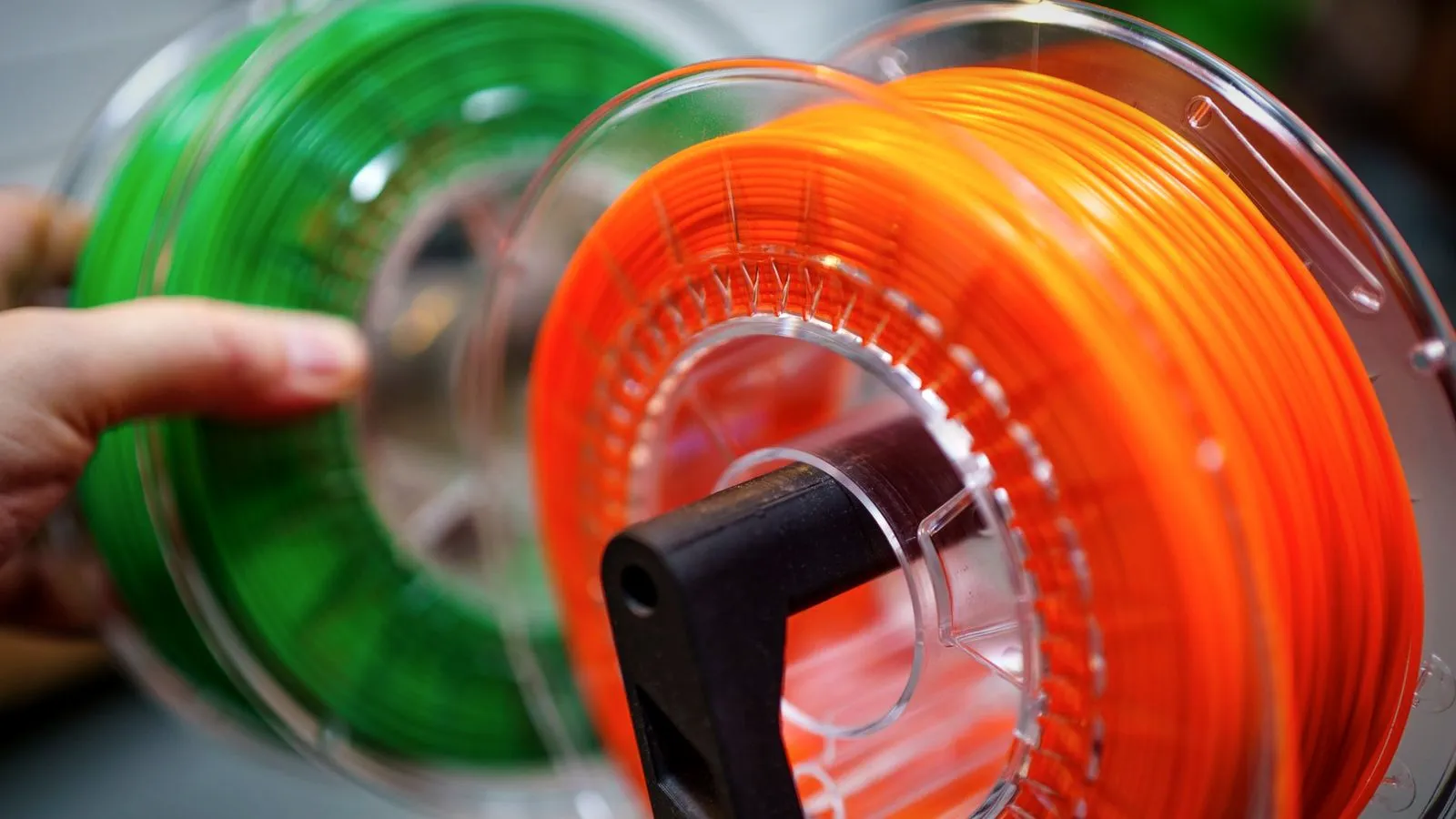
You print PLA+ on the same hardware as PLA: no enclosure, no hardened nozzle, part cooling fan on. Both are sold in the same diameters, so buy the size your printer takes, which is 1.75 mm filament on most current machines. The differences are in the details. For dialing in nozzle and bed settings on any spool, see our guide to PLA temperature.
| Setting | eSUN PLA-Basic / PLA+ | Polymaker PLA / PLA Pro | Bambu Lab PLA Basic / PLA Tough+ |
|---|---|---|---|
| Nozzle | 210–230 / 210–230 °C | 190–230 / 190–230 °C | 190–230 / 220–250 °C |
| Bed | 45–60 / 45–60 °C | 25–60 / 30–60 °C | 35–45 / 35–65 °C |
| Part cooling fan | 100% / 100% | On / On | On / On |
| Drying | 50 °C, 8–12 h / same | 55 °C, 6 h / same | 50 °C, 8 h / 55 °C, 8 h |
| Speed | Under 300 mm/s / same | 50–200 mm/s / same | Under 300 mm/s / same |
Practical tips when you switch:
- Use the brand’s range, not a generic PLA profile. Bambu Lab’s PLA Tough+ starts at 220 °C (428 °F), 30 °C above the bottom of its PLA Basic range.
- Print a temperature tower for each new filament, because the recommended ranges differ between grades and brands. Our guide on how to calibrate a 3D printer covers temperature, flow and retraction tests.
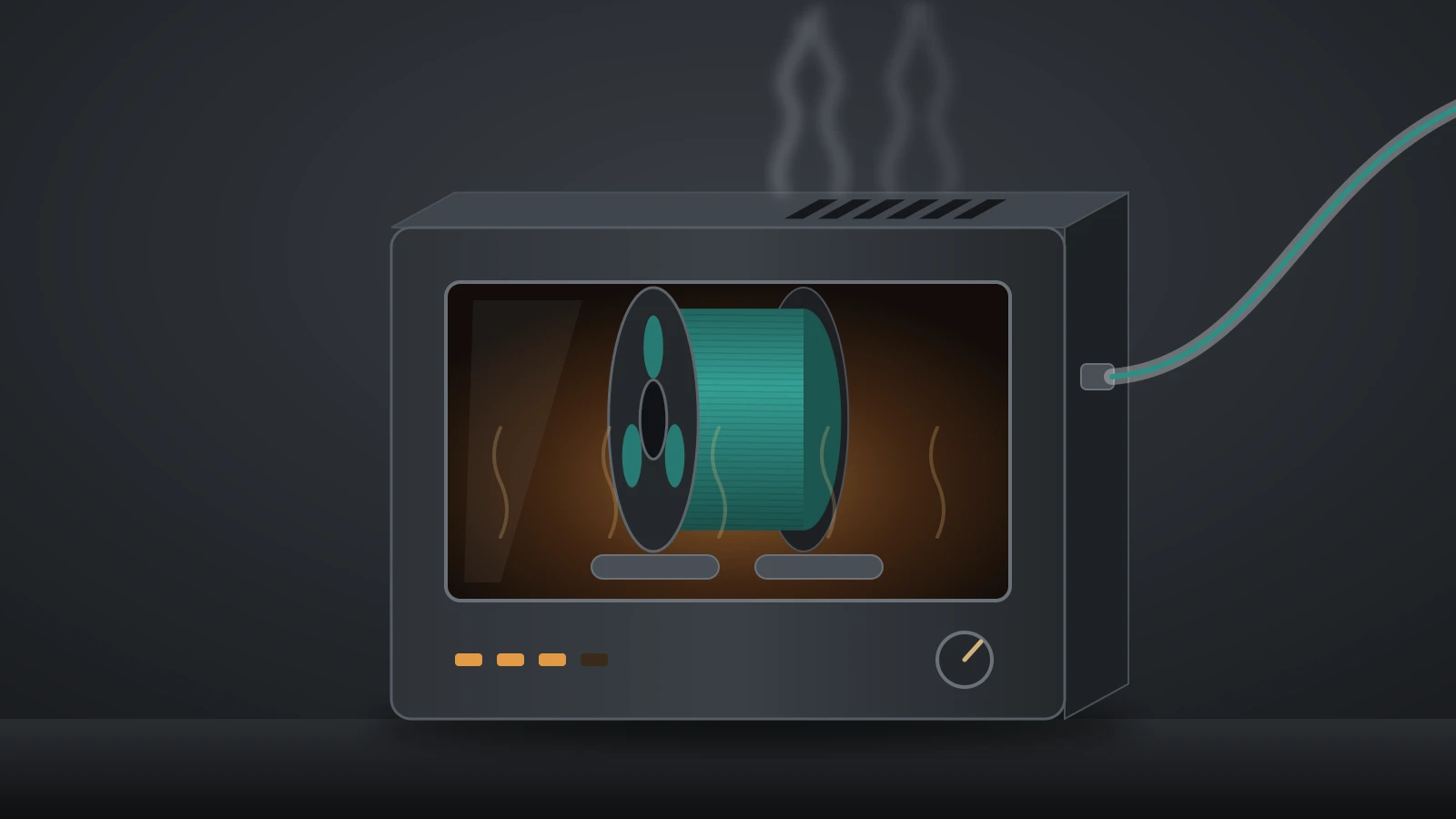
- Dry it like PLA. The data sheets list 50–55 °C (122–131 °F) drying for both grades within each brand.
- Expect a different finish. Colors and sheen vary by brand; judge a spool by a test print, not the label.
When to choose PLA+ and when standard PLA is enough
| Choose PLA+ if the part… | Standard PLA is fine if the part… |
|---|---|
| Will be dropped, thrown or knocked around | Sits on a shelf or desk |
| Has clips, snap fits, hooks or thin pins | Is a prototype to check size and looks |
| Holds screws or gets tightened | Needs the stiffest possible walls |
| Is a tool, jig or holder you use daily | Carries no load and is mainly about surface detail |
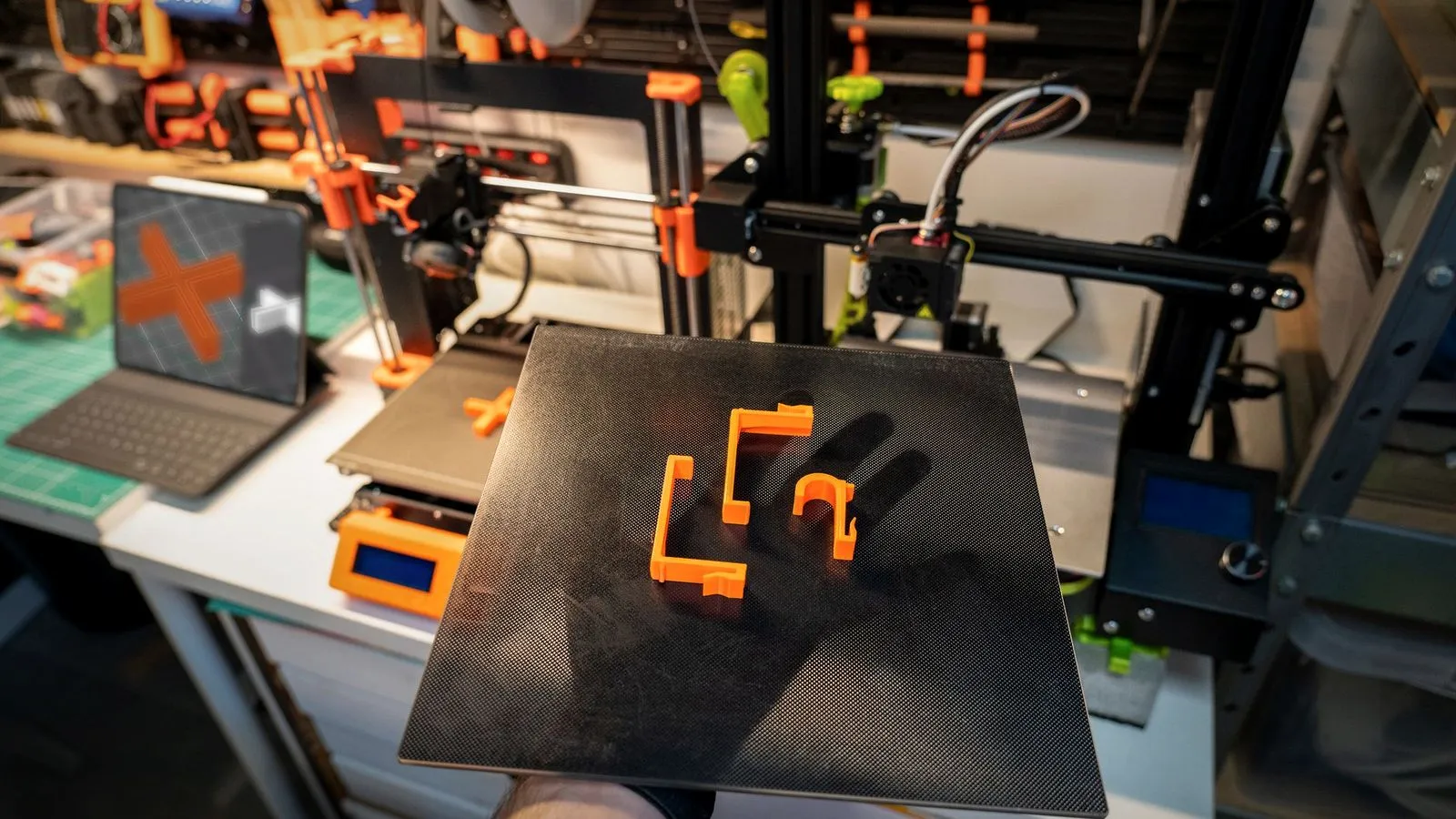
Workshop prints are where PLA+ earns its place. Tool holders, wrench organizers, clips and handles all see repeated knocks, and the extra impact strength keeps them in one piece. See our guide to 3D printed tools for projects that suit it.
Figures and models are mixed. For 3D printed action figures, PLA+ helps with thin parts that snap, such as weapons, antennas and joint pins, while a solid statue prints just as well in standard PLA.
Neither is right for heat. Both soften above roughly 54–61 °C on these data sheets, so skip both for car interiors, parts near motors or anything left in the sun.
Other PLA variants and what their names mean
Brands use many names, and they do not all mean “tougher”:
- PLA+, PLA Pro, Tough PLA, PLA Tough+: toughened PLA with higher impact strength, as in the table above. The exact gain depends on the brand.
- High-speed PLA (HS, HF or “hyper”): tuned to melt and flow fast enough for high-speed printers. Speed says nothing about toughness, so check the impact value.
- Silk PLA: modified for a glossy, metallic-looking surface. It is chosen for looks, not strength.
- Metal-filled PLA: PLA packed with real metal powder, so parts are much heavier and can be polished to a metal shine, but they are still plastic and the powder is abrasive. Our guide to metal 3D printer filament explains the difference from silk and metallic PLA.
- PLA-CF: PLA filled with chopped carbon fiber for a stiffer, matte part. The fibers are abrasive, so it needs a hardened nozzle.
The bottom line
PLA+ is PLA made tougher, not stronger in every sense and not more heat resistant. On manufacturer data sheets it absorbs 2 to 9 times more impact energy than the same brand’s standard PLA, while tensile strength and heat deflection stay about the same. Use PLA+ for functional parts that get handled, dropped or clipped together, and plain PLA for display pieces and prototypes.
Sources
- eSUN technical data sheets (Feb 2026): PLA+ and PLA-Basic (Izod impact, tensile, elongation, flexural, heat distortion at 0.45 MPa, print and drying settings, UV resistance)
- Polymaker technical data sheets: PolyLite PLA and PolyLite PLA Pro (notched Charpy impact, tensile, elongation, Young’s modulus, heat deflection, print and drying settings)
- Bambu Lab technical data sheets, version 3.0: PLA Basic and PLA Tough+ (notched Charpy impact, tensile, elongation, Young’s modulus, heat deflection, print and drying settings)