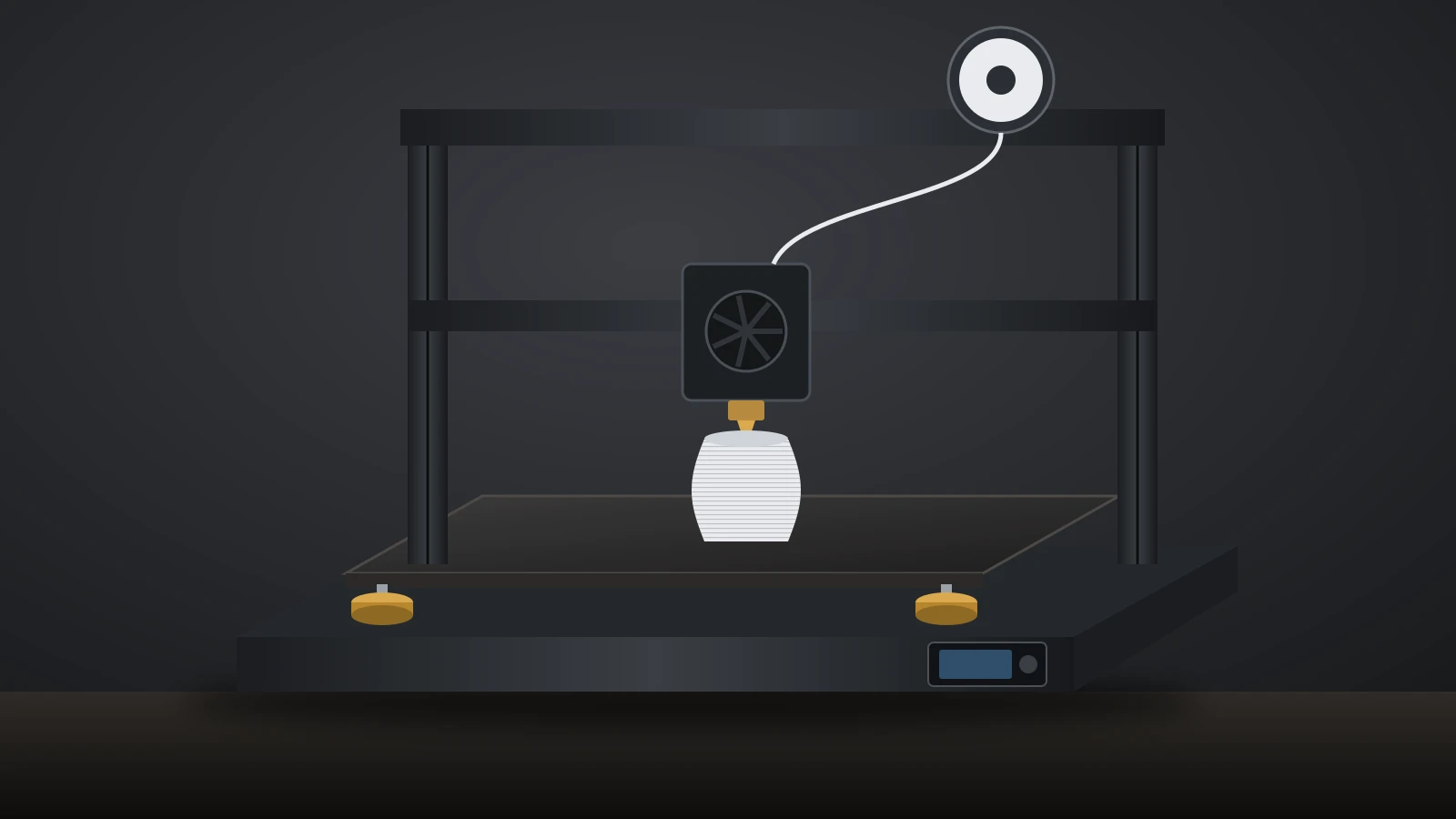
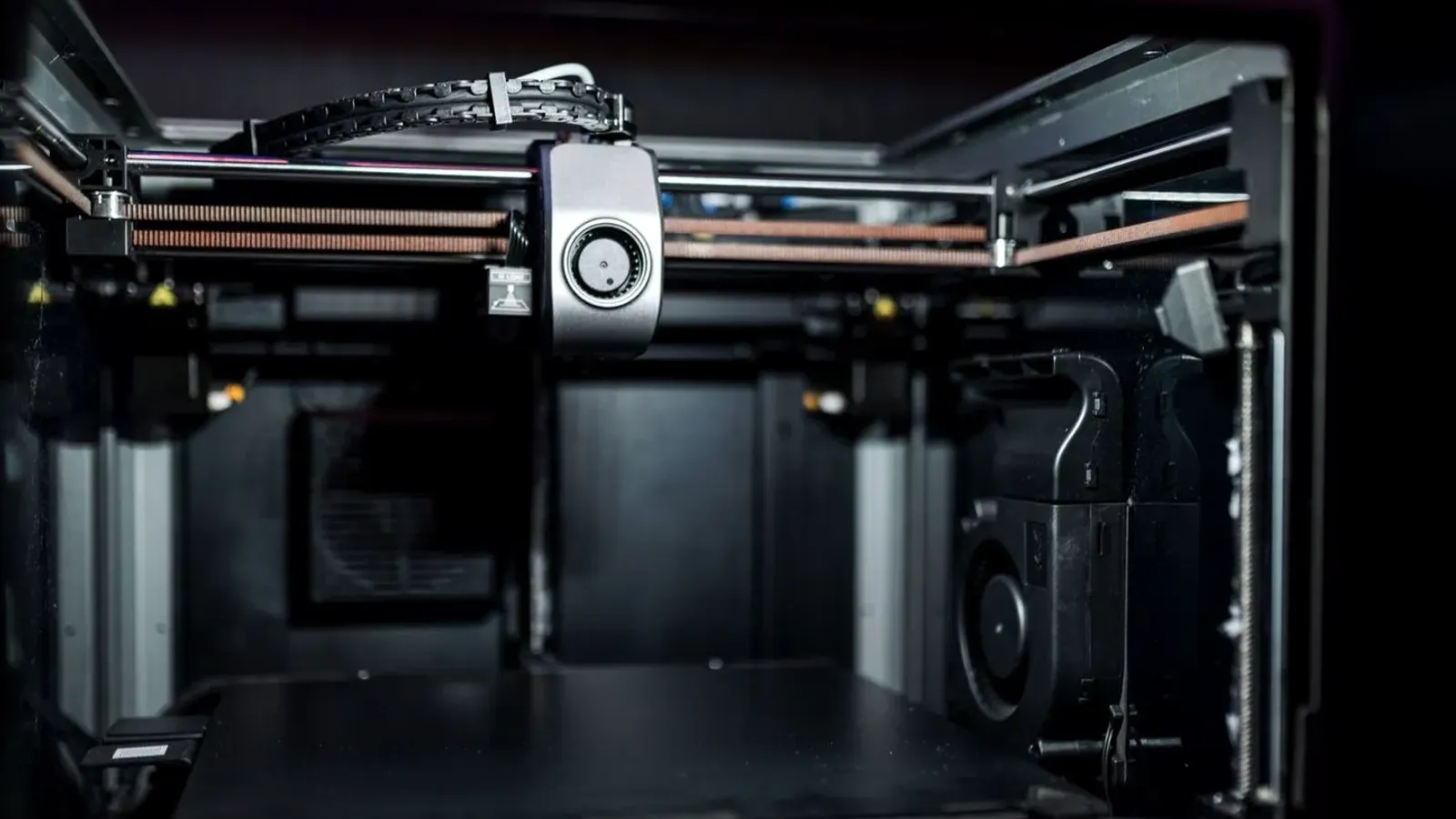
An enclosed 3D printer has panels, a door and a lid around the print area. The box traps warmth from the bed, or from a dedicated heater, so ABS, ASA, nylon and polycarbonate cool evenly instead of warping. It also keeps drafts, fingers and pets away from hot parts. If you only print PLA, you usually don’t need one.
An enclosure is not an air purifier on its own, and the heat it holds can cause problems with PLA. This guide covers when an enclosure matters, passive vs actively heated chambers, filtration, and a spec comparison of popular models taken from the manufacturers’ own pages. If outdoor-grade parts are the goal, start with our guide to ASA filament.
The short answer
| You mainly print… | Do you need an enclosure? |
|---|---|
| PLA or TPU | No. Open the door or lid for PLA, or pick a model that vents its chamber |
| PETG | Optional. It helps large parts by blocking drafts |
| ABS or ASA | Yes. An enclosure is what makes these practical |
| Nylon (PA), polycarbonate (PC), fiber-filled engineering blends | Yes, ideally with an actively heated chamber |
| Next to children, pets or in a classroom | Useful as a physical barrier around hot and moving parts |
| In a living space or office | An enclosure plus filtration or venting to the outdoors |
What is an enclosed 3D printer?
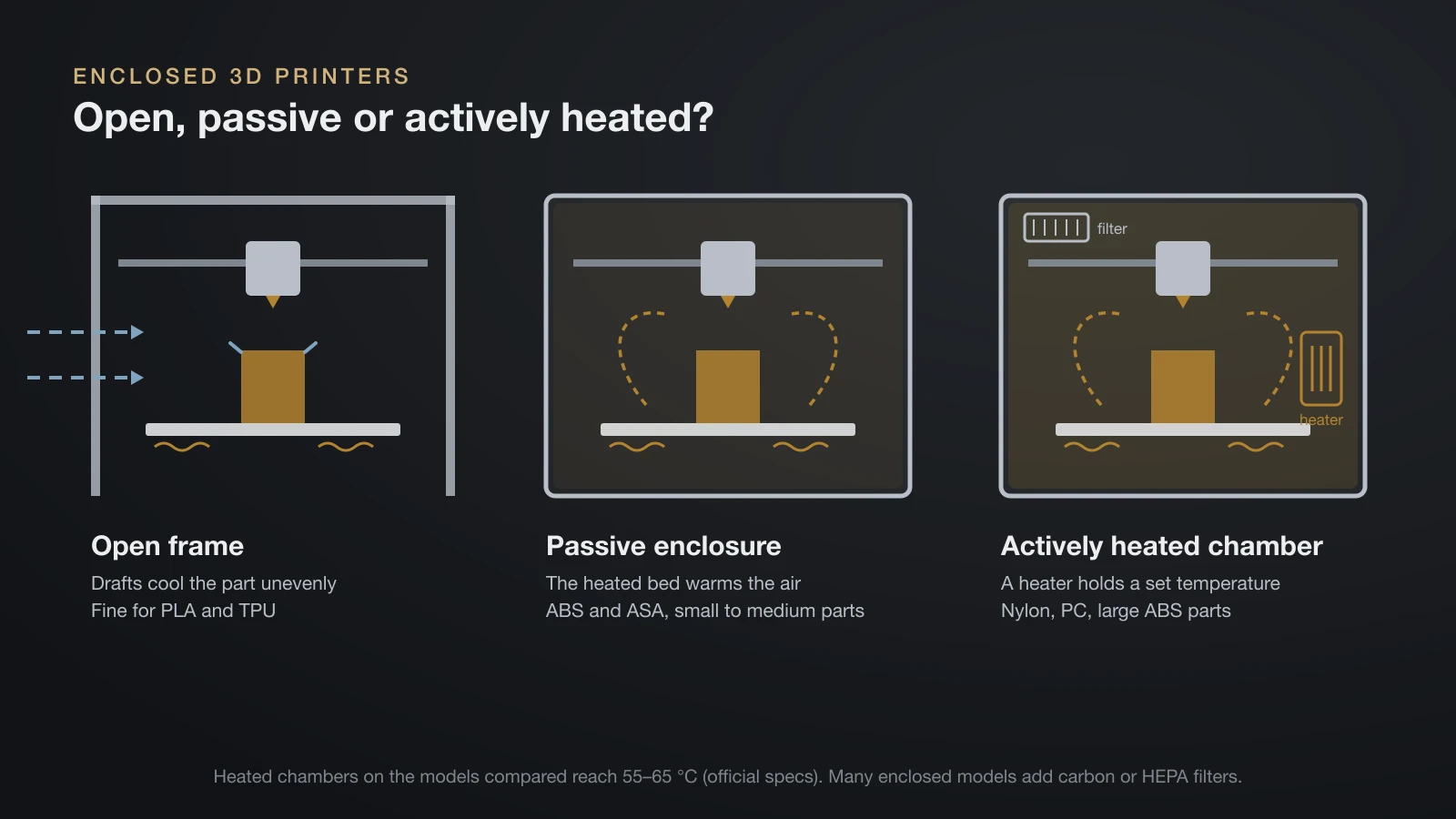
An enclosed 3D printer is a machine whose build area is closed on all sides, usually with a clear door and lid so you can watch the print. Many current models are CoreXY printers, where the bed moves only up and down and the print head travels inside the box.
There are two kinds of enclosed chamber:
- Passive: the heated bed warms the air inside. Bambu Lab says the P1S chamber “cannot be precisely controlled” because its temperature simply follows the bed.
- Actively heated: a dedicated chamber heater holds a set air temperature. The Bambu Lab H2D and X2D reach up to 65 °C (149 °F), the Creality K2 Plus up to 60 °C (140 °F), and the Prusa CORE One+ manages its chamber up to 55 °C (131 °F).
You can also build or buy an enclosure for an open printer; Bambu Lab even sells a kit that turns the open P1P into a P1S. That add-on route is a separate topic from buying a printer that comes enclosed.
When an enclosed 3D printer makes sense
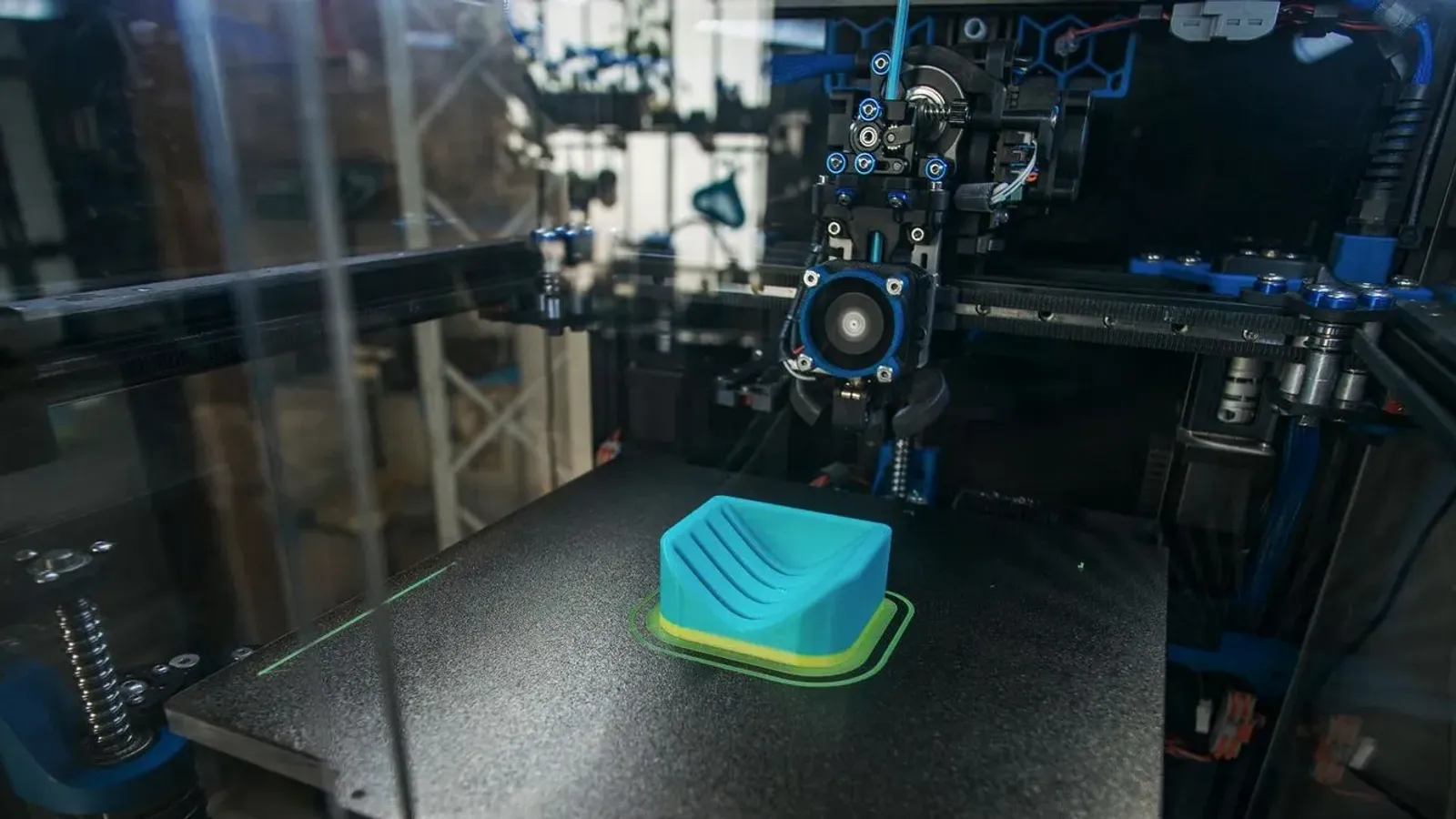
The main reason is warping. As Prusa puts it, engineering materials warp when they cool unevenly: corners lift and layers separate. A warm, still chamber slows cooling and keeps the whole part at a similar temperature.
Bambu Lab’s own spec sheet shows the difference. On the open-frame P1P, ABS and ASA are listed as “Capable”. On the enclosed P1S, the same printer family with panels and a door, they move to “Ideal”.
Other reasons to choose an enclosed FDM 3D printer:
- Drafts and cold rooms: a garage, basement or air-conditioned room can crack tall ABS or ASA parts that would print fine in still air.
- Safety barrier: NIOSH notes that nozzles typically run at 190–260 °C and heated beds at 55–120 °C, hot enough to burn, and that moving parts can trap fingers or hair. A closed door keeps curious hands and pets out.
- Noise: panels muffle some fan and motor noise, though a fast printer is still clearly audible.
- Dust: a closed chamber keeps dust and pet hair off the bed between prints.
Fumes: what an enclosure does and doesn’t do
Heated plastic releases ultrafine particles (smaller than 100 nm) and volatile organic compounds (VOCs). NIOSH’s guide for makerspaces and schools says emissions depend on the filament, and that higher extruder temperatures produced larger emissions in chamber studies.
An enclosure helps, but only when the air inside is filtered or exhausted:
- Particles: in studies NIOSH summarizes, a filtered enclosing hood cut particle emissions by 97–99%. When exhaust air from an enclosure was vented outdoors through a HEPA filter, the reduction reached 99%.
- Gases: HEPA filters capture particles, not gases. Activated carbon targets VOCs and odors, and every filtered printer in the table below includes it or an air purifier.
- Opening the door: NIOSH lists opening printer doors as a higher-exposure activity and cites a clearance time of about 20 minutes after a print before opening the enclosure.
NIOSH’s lower-exposure setup is a printer “in an enclosed chamber equipped with a filtering device, or exhausted to the outdoors.” A sealed box with no filter still releases everything when the door opens. Place the printer in a ventilated room either way, and follow the filament maker’s guidance on ventilation.
Downsides of enclosed 3D printers
The biggest catch is PLA. PLA softens at a low temperature, and a warm chamber can soften it before it reaches the melt zone. The result is heat creep: the filament swells in the hotend and clogs it.
Bambu Lab’s guidance for the P1S makes this concrete. With the default textured plate, PLA needs a 55 °C bed, so Bambu Lab recommends printing PLA with the front door open or the top cover removed. With its Cool Plate at 35 °C, the door can stay closed. The general rule: keep the enclosure at least 10 °C below the filament’s glass transition temperature.
| Material | Bed temperature (Bambu Lab) | Remove the top cover? |
|---|---|---|
| PLA | 45–60 °C | Yes |
| TPU | 35–45 °C | Yes |
| PETG | 60–80 °C | No |
| ABS | 90–100 °C | No |
| ASA | 90–100 °C | No |
| PC | 90–110 °C | No |
| Nylon (PA) | 90–110 °C | No |
Newer designs solve this with vents. Prusa says the CORE One+ can keep its door closed for PLA because an automatic top vent opens for low-temperature materials. Bambu Lab’s P2S draws cool air in from outside the chamber for the same reason.
Other trade-offs:
- Bigger footprint than an open printer with the same build volume.
- Harder access for cleaning the nozzle or clearing a jam.
- Filters to replace: carbon and HEPA filters are consumables with their own service intervals.
What to look for in an enclosed FDM 3D printer
- Chamber heating: passive is enough for ABS and ASA on small to medium parts. For nylon, polycarbonate and large ABS parts, an actively heated chamber helps. Nylon also has to be dried before it prints well; our guide to nylon filament covers the types, drying and settings.
- Filtration: at minimum an activated carbon filter. A three-stage system (pre-filter, HEPA, activated carbon) handles both particles and VOCs.
- PLA handling: a top vent or fresh-air intake that lets you print PLA with the door closed.
- Hotend temperature: 300 °C covers ABS, ASA and most nylons. Higher-temperature engineering plastics such as PEEK need more.
- Hardened nozzle and extruder gears if you plan to print carbon- or glass-fiber filaments.
- Build volume for your largest part, since you can’t extend an enclosure later. Our guide to large 3D printers compares the bigger beds.
- Multi-color support: most enclosed models accept an automatic filament changer; see how they work in our guide to multi-color 3D printers.
Popular enclosed 3D printers compared
All specs below come from each manufacturer’s product page or official wiki, checked in September 2026. Prices change often, so they are left out. If a new enclosed machine is over budget, our guide to used 3D printers explains what to check on a second-hand one.
| Printer | Build volume (mm) | Max nozzle | Chamber | Air filtration |
|---|---|---|---|---|
| Bambu Lab P1S | 256 × 256 × 256 | 300 °C | Passive, warmed by the bed | Activated carbon |
| Bambu Lab P2S | 256 × 256 × 256 | 300 °C | Passive, with an airflow flap | Activated carbon |
| Bambu Lab X2D | 256 × 256 × 260 | 300 °C | Active, up to 65 °C | G3 pre-filter, H12 HEPA, activated carbon |
| Bambu Lab H2D | 350 × 320 × 325 (total, two nozzles) | 350 °C | Active, up to 65 °C | Three-stage, same as X2D (per Bambu Lab) |
| Prusa CORE One+ | 250 × 220 × 270 | 290 °C | Active control, up to 55 °C, auto vent | Optional HEPA add-on |
| Creality K1C | 220 × 220 × 250 | 300 °C | Passive | Activated carbon |
| Creality K2 Plus | 350 × 350 × 350 | 350 °C | Active heater, up to 60 °C | Built-in air purifier |
| Qidi Q2 | 270 × 270 × 256 | 370 °C | Active PTC heater, up to 65 °C | G3 pre-filter, H12 HEPA, activated carbon |
The H2D figure is the total area its two nozzles reach together; a single part is limited to 325 × 320 × 325 mm, and a part that uses both nozzles to 300 × 320 mm.
Which enclosed printer fits which user?
- Mostly PLA and PETG, some ABS or ASA: a passive chamber with a carbon filter (P1S, P2S, K1C) is enough. Choose one that vents for PLA or be ready to open the door.
- Regular ABS, ASA and nylon, or large parts: an actively heated chamber (X2D, H2D, CORE One+, K2 Plus, Q2).
- Office, classroom or bedroom: three-stage filtration (X2D, H2D, Q2), plus a ventilated room and a clearance time before opening the door.
- Large parts: 350 mm class machines (H2D, K2 Plus).
Whichever you choose, dial in each engineering filament inside the closed chamber, since warm, still air changes how it prints. Our step-by-step guide on how to calibrate a 3D printer covers the order, and our list of 3D printer accessories covers the tools that make it easier.
The bottom line
An enclosed 3D printer is what makes ABS, ASA, nylon and polycarbonate practical, and it adds a useful barrier around hot, moving parts. It is not a fume solution unless the air is filtered or vented, and it can clog on PLA unless you open the door or the printer vents itself. Pick passive or active heating based on the materials you print, and treat carbon or HEPA filtration as essential indoors.
Sources
- NIOSH (CDC): Approaches to Safe 3D Printing, DHHS (NIOSH) Publication 2024-103 (emissions, 97–99% reduction with filtered enclosures, 20-minute clearance time, nozzle and bed temperature ranges)
- Bambu Lab Wiki: What is heat creep?, P1 Series FAQ and P2S FAQ (PLA in enclosures, bed temperature table, passive chambers, P2S specs)
- Bambu Lab US Store product pages: P1S, X2D, H2D and P2S (specs, filtration, airflow)
- Prusa Research: CORE One+ product page (specs, chamber control, auto vent, warping)
- Creality: K1C and K2 Plus product pages; QIDI: Q2 product page (specs)